
How Do Porta Potties Work?
The setup is simpler than most people expect. A standard porta potty rental is a self-contained box: seat on top, holding tank underneath, vent stack running up the back to pull odor out and away from the user. The chemical in the tank, often a blue or green treatment, does the real work. It breaks down waste and toilet paper while suppressing the smell, which is the main reason units do not reek the way people fear. Under ANSI/PSAI Z4.3, the baseline service interval is one visit a week for up to 10 users over a 40 hour week, though busier sites in Wyoming need more frequent pumping. A construction worker walking to a porta potty on a job site is using a unit designed around OSHA 1926.51(c), which sets toilet counts by crew size: one facility for 20 workers or fewer, then additional seats as the headcount climbs. If you are scoping a job, the how many porta potties do I need guide walks through the math.
How Do Flushable Porta Potties Work?
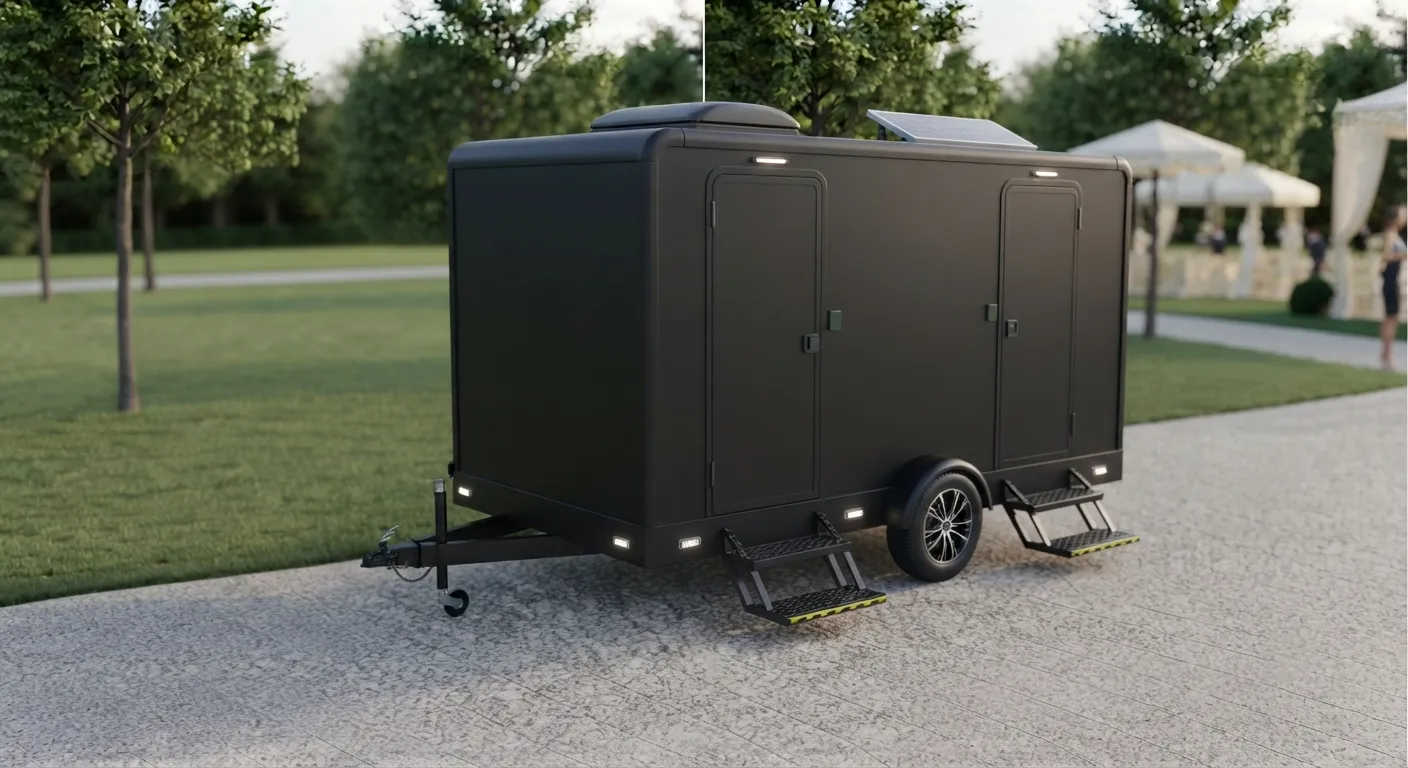
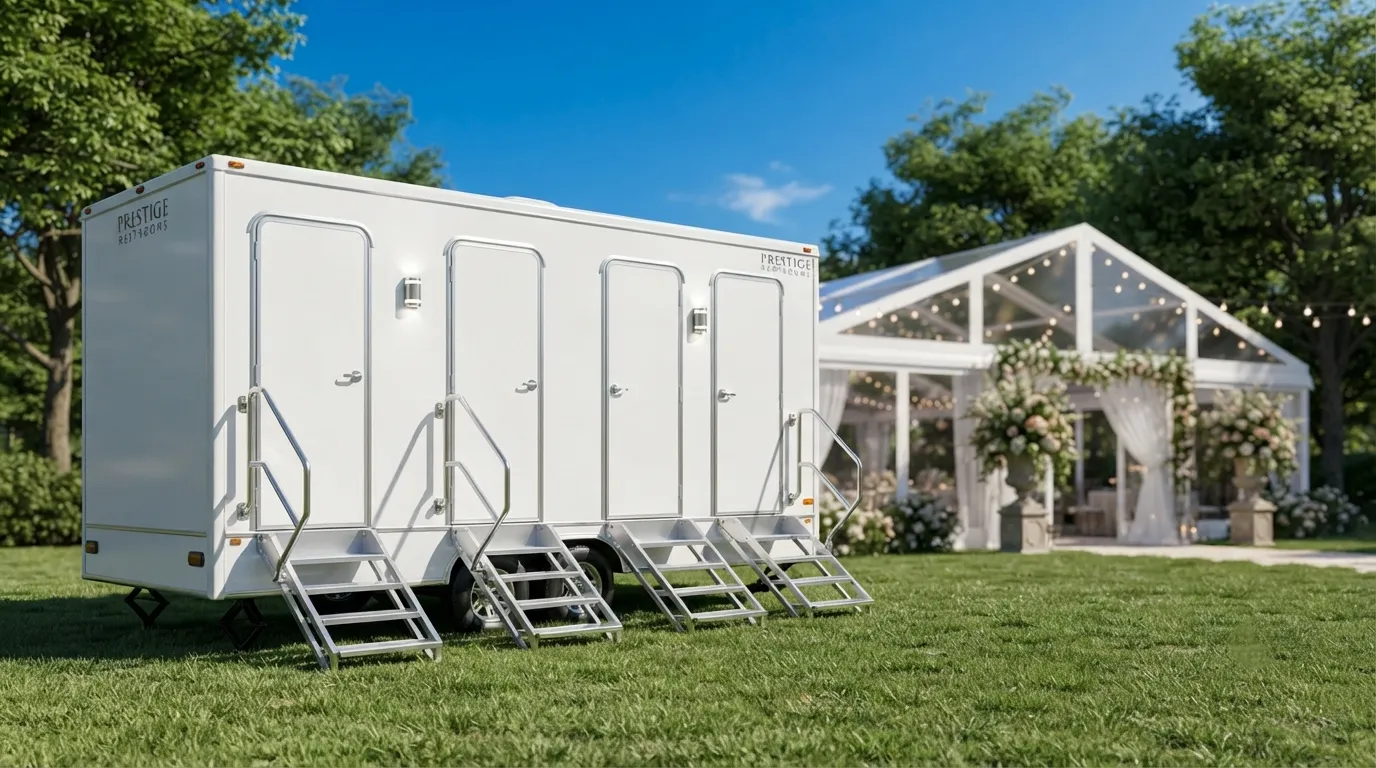
A deluxe flushable porta potty adds a small fresh water tank and a foot pump or hand pump that pushes a measured amount of water into the bowl with each use, flushing waste into a separate holding tank below. It feels closer to a home bathroom because it is: sink, hand sanitizer dispenser, and sometimes a mirror come standard on the deluxe line. The two tanks stay separate, so fresh water never mixes with waste. This matters most for weddings and longer events where guests expect something nicer than a standard unit. Wyoming Porta Pros sets these up for wedding restroom rental bookings and multi-day event restroom rental jobs across Wyoming. For a crew that wants real plumbing rather than a flush-assist unit, a restroom trailer rental runs on a fresh water supply and holding tank with actual porcelain fixtures, and the 2 stall restroom trailer is the common entry point for smaller events.
How Does a Portable Sink Work?
A portable sink rental or handwashing station rental uses a foot pump or hand crank to draw water from a built-in fresh water tank, run it over the hands, and drain the greywater into a separate holding tank underneath. No plumbing hookup needed. Under 29 CFR 1910.141(d)(2), washing facilities need soap and towels or a hand drying device, since hand sanitizer alone does not satisfy that standard, and Wyoming Porta Pros stocks units accordingly. This distinction matters on job sites where crews work with paints, coatings, herbicides or insecticides. OSHA 1926.51(f)(1) specifically requires washing facilities in those situations, separate from the general sanitation rule. Farms with hand-labor crews fall under a different standard, OSHA 1928.110, which requires one facility per 20 employees within a quarter mile walk, along with potable water under OSHA 1926.51(a)(1). See handwashing station requirements for the full breakdown, and hand sanitizer station rental for standalone dispenser options.
How Do Camping Porta Potties Work?
Camping and remote-site units work the same way as a standard construction unit, just scaled for lower traffic and longer stretches between service. The tank still relies on chemical breakdown rather than a flush, and Wyoming Porta Pros routes a truck out on a set interval so tanks do not overflow between visits. For farm properties, hunting camps, and agricultural operations around Wyoming, farm and agricultural restrooms covers placement on uneven ground and longer driveways. A porta potty placement guide matters here too: units need stable, level ground, and ADA Standards 302.1 calls for surfaces that are stable, firm and slip resistant on any accessible route. Cold weather changes the chemistry and service interval, which the porta potty in winter page covers for anyone renting into a Michigan winter.
Septic systems work on a related but separate principle: an 1,000+ gallon septic tank holds wastewater from a home rather than a portable unit, and it needs regular septic tank cleaning using pump trucks, not the deodorizing chemicals used in porta potties. A residential tank is typically pumped every 3 to 5 years depending on tank size and household size. Grease traps run on a similar service model: a grease interceptor gets pumped once fats, oils, grease and solids reach 25 percent of the liquid depth, covered in grease trap pumping.
Frequently asked questions
Do porta potties smell?
Not when serviced on schedule. The chemical treatment in the tank controls odor between pump-outs, and the vent stack pulls gas up and away from the seat. Units serviced weekly or more often, per ANSI/PSAI Z4.3, rarely develop a strong smell. See do porta potties smell for more.
What chemicals go in a porta potty?
A blended deodorizer and waste-digesting treatment, usually blue or green, goes into the tank before delivery. It breaks down solids, controls odor, and keeps the tank from foaming during transport. Wyoming Porta Pros adds it fresh at setup and again at each service visit.
How often are porta potties cleaned?
Weekly service is the baseline for moderate use, per ANSI/PSAI Z4.3, but high-traffic events or large crews often need two or more visits a week. Wyoming Porta Pros builds the schedule around headcount. Full detail is on how often are porta potties cleaned.
Are porta potties required on construction sites?
Yes. OSHA 1926.51(c) sets minimum toilet counts by crew size, starting at one unit for 20 workers or fewer. The OSHA portable toilet requirements page covers ratios for larger crews and washing facility rules.
Can I rent a porta potty for one weekend?
Yes, weekend rentals are common for events and short jobs. Pricing and options differ from weekly or monthly rentals; see porta potty rental per day and porta potty rental cost for the full breakdown by duration.
Next step
Get a delivery date
Tell us the address, the dates and the headcount. We size the order and confirm the route.